


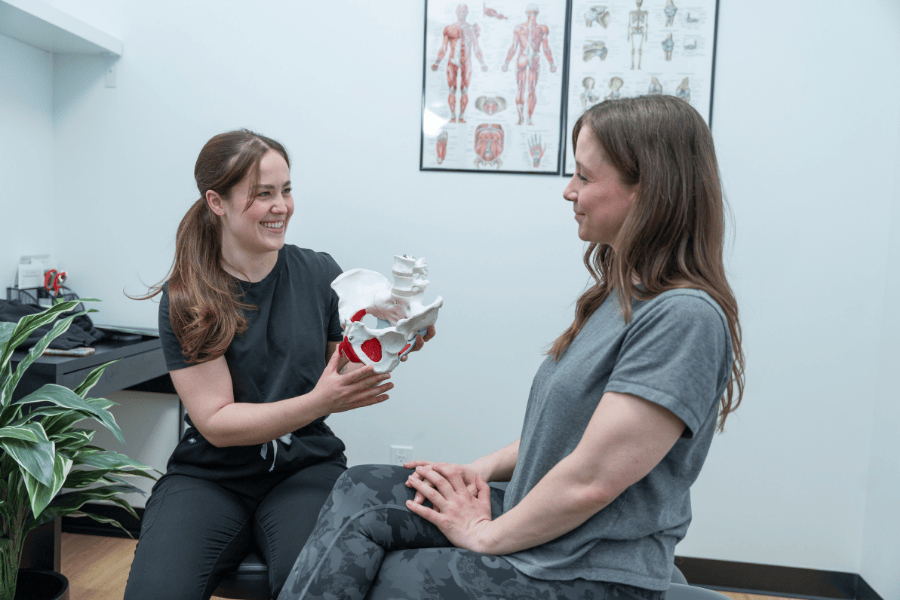
Pelvic floor physiotherapy is often associated with postpartum care. While that is a common reason someone seeks support, it’s not the only one. Below, Megan answers frequently asked questions about pelvic floor health and who can benefit from pelvic floor therapy.
Is Pelvic Floor Therapy Only for Postpartum Women?
No. Postpartum recovery is one reason someone seeks pelvic floor support, but it isn’t the only one. Pelvic floor therapy is also relevant during pregnancy, as well as throughout perimenopause and menopause. It’s often considered when ongoing lower back or hip discomfort doesn’t fully improve with musculoskeletal treatment, and the pelvic floor may be contributing.
In those situations, it’s helpful to remember that the pelvic floor doesn’t work in isolation. It works alongside the abdominal wall, diaphragm, hips, and lower back. When those systems are not coordinating well, symptoms can appear in ways that don’t always seem directly connected.

What Does Pelvic Floor Physiotherapy Involve?
It starts with a detailed assessment and conversation about symptoms, lifestyle, and movement patterns. From there, treatment is based on what is identified.
Some patients need to build strength. Others benefit from improving coordination or reducing excess tension. Treatment often includes addressing lifting patterns, exercise habits, and how pressure is managed through the abdomen. In certain cases, internal electrical stimulation is used to assist with muscle activation.
Every plan is individualized to help women feel more stable, supported, and confident in their day-to-day movement.
What Symptoms Should Not Be Ignored?
Many pelvic symptoms are normalized, especially after childbirth or with age. Leakage during coughing or exercise, a feeling of heaviness, a diagnosed or suspected prolapsed uterus, discomfort with intimacy, or persistent pelvic, hip, or lower back pain are all worth addressing.
These concerns are common, but they’re not something you have to live with. If symptoms change how you move, exercise, or go about your day, it makes sense to have them assessed.
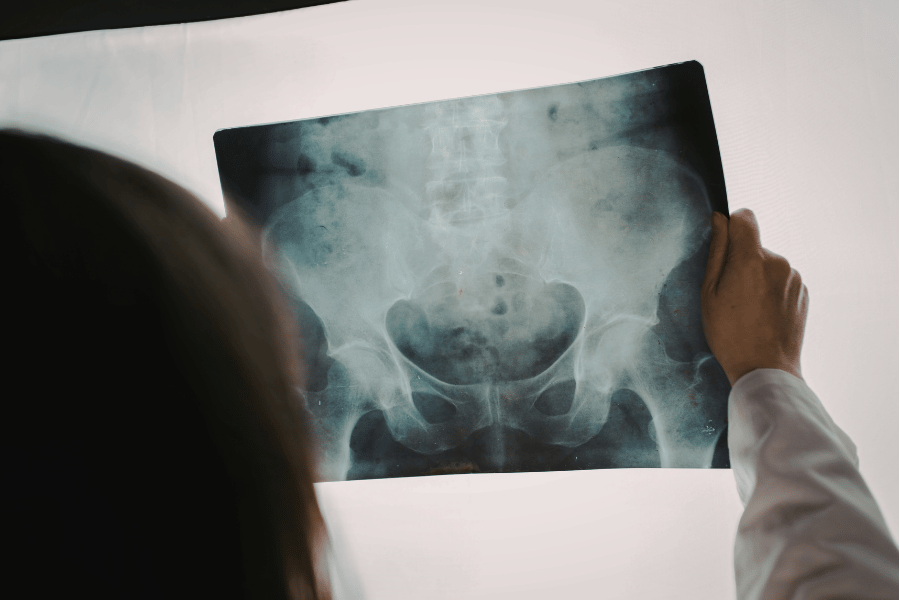
Can Pelvic Floor Therapy Help During Perimenopause or Menopause?
Yes. Hormonal changes during this stage of life can affect tissue support and muscle tone. During perimenopause and menopause, it’s common for women to notice urinary urgency, a sense of reduced pelvic support, or feeling less stable during workouts.
Physiotherapy during this stage focuses on rebuilding strength where needed, improving coordination, and helping the body manage load more effectively during exercise and daily activities.
When Should Someone Consider Booking an Appointment?
Don't wait until symptoms become severe. If something feels different, or you find yourself modifying activities to avoid discomfort, that’s usually a sign it’s worth having it assessed. The earlier these concerns are addressed, the easier they are to manage.
A pelvic floor assessment can help clarify what is happening and outline appropriate next steps. For women seeking individualized support, pelvic physiotherapy services are available at select HealthOne locations.

About Megan McInroy
Megan McInroy is a Registered Physiotherapist at HealthOne Medical & Wellness with more than 10 years of experience in orthopedic physiotherapy. She completed an Honours Bachelor of Science in Kinesiology at the University of New Brunswick and a Master of Science in Physical Therapy at the University of Toronto. Megan has also completed the Medical Acupuncture Program at McMaster University and continues to pursue advanced manual therapy training. Her approach focuses on identifying the underlying source of pain and developing individualized treatment plans to support long-term recovery.




 Back to Main Blog

